
Prison re-entry is more than a change of address
Whereas most inmates believe they need "a move" from behind the fence into the free world, they need more, a total reset from the "inside-out" (not only from inside prison to the outside world but also changing the whole person from the heart).
The Critical Point of Re-entry
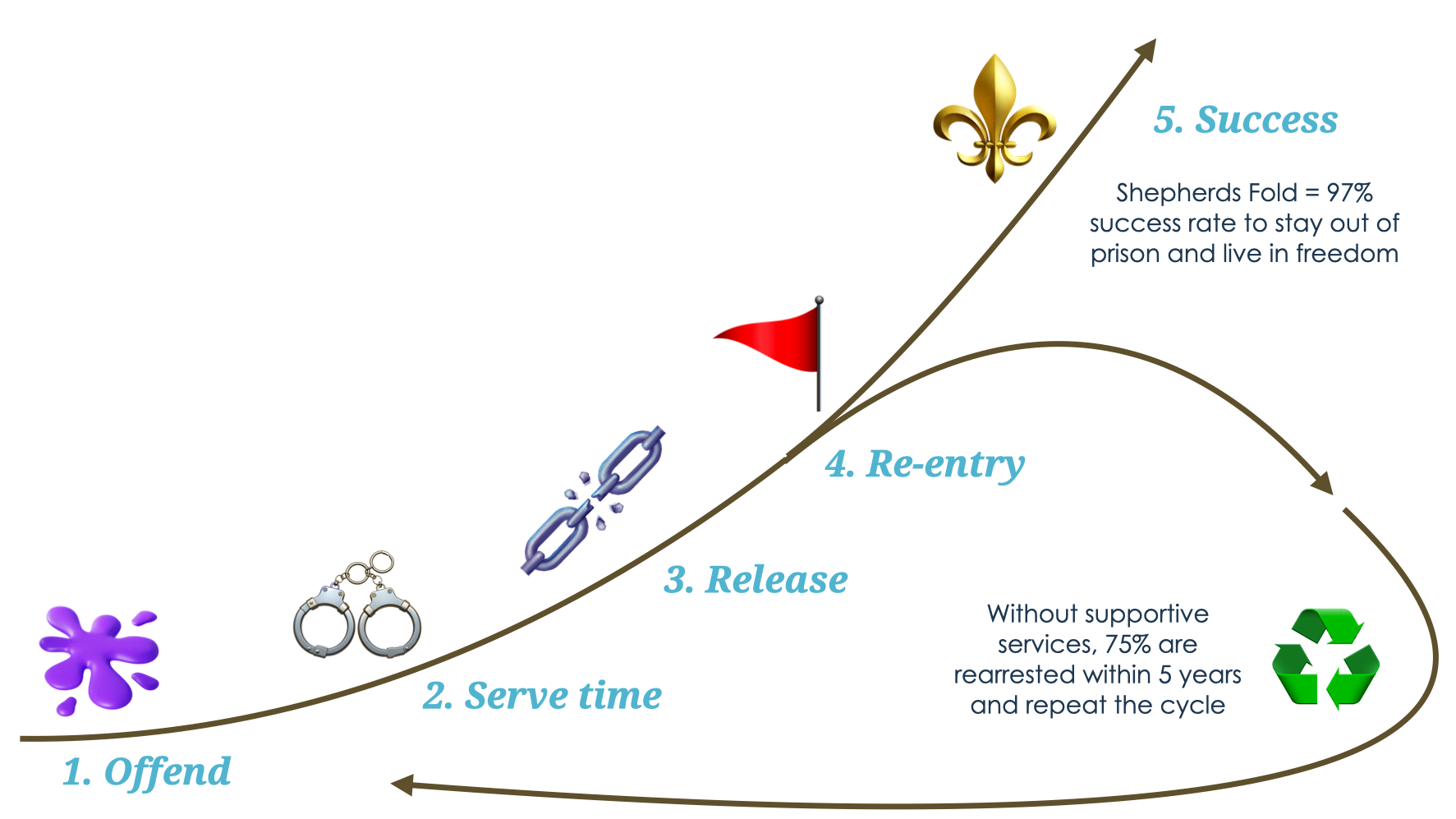
The issue
Most inmates (1) offend, (2) serve time, (3) get released, and (4) re-enter the "free world."
However, without supportive services, up to 75% are re-arrested within 5 years. They go repeat the cycle, sometimes for the rest of their lives.
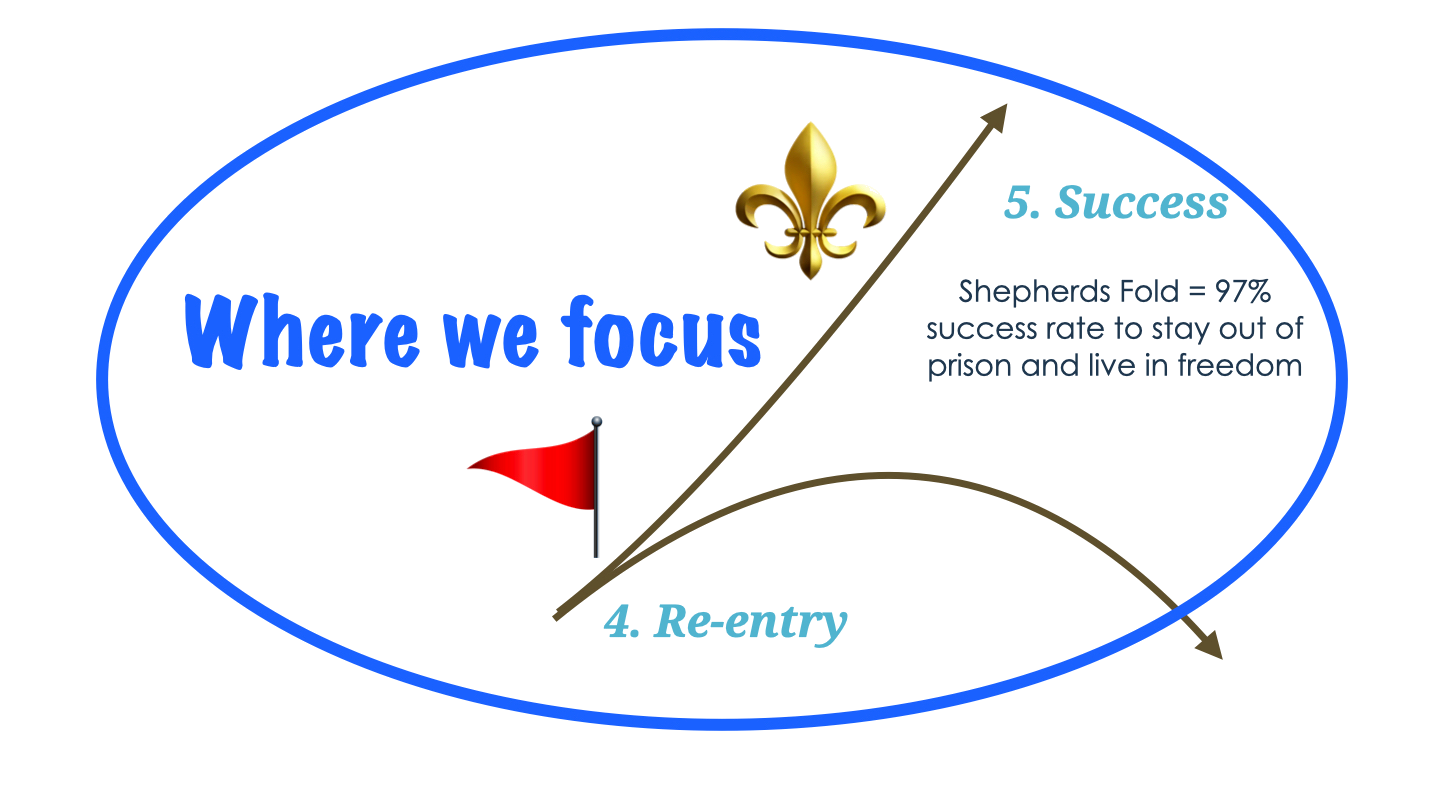
Where we focus
We focus specifically on the “critical point” of re-entry, the first 6-9 month period when inmates are released and must adjust from life behind bars to living in the “free world.”
With intentional intervention (and the right kind of assistance), former inmates can move into a new chapter of life and rewrite a better future for themselves and their loved ones.
Our Approach
The Shepherds Fold program is part-informational and part-pragmatic… all by design.

1. Determine the outcome
We’ve sketched what “successful” re-entry and lasting change looks like, based on 40 years of experience
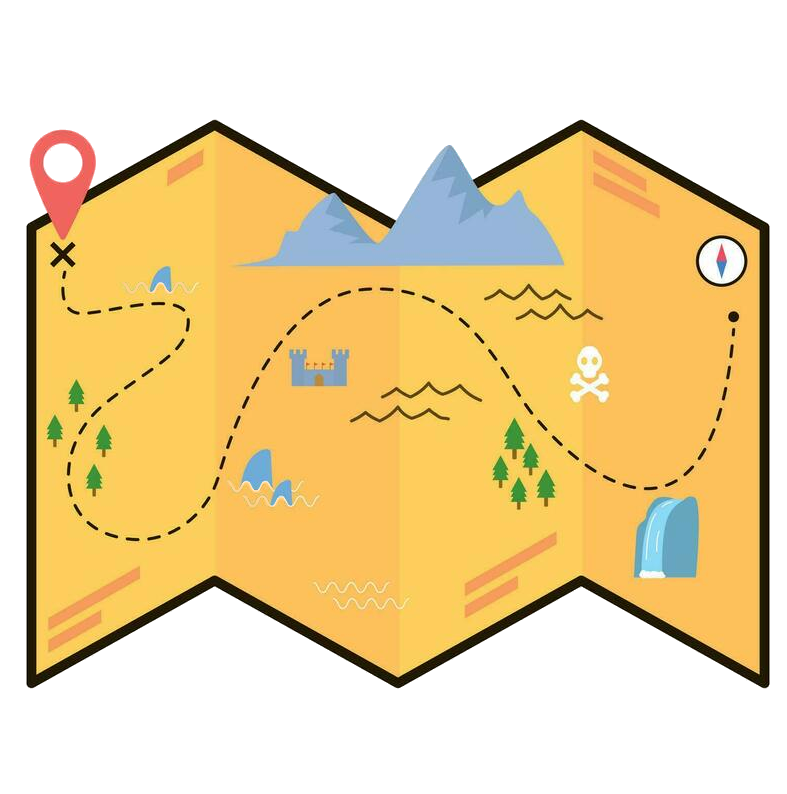
2. Draw a map to get there
We’ve created a path to move from prison to productivity… highlighting helps to access and obstacles to avoid

3. Define clear milstones
We’ve marked objective markers along the route, so participants can celebrate progress and see forward movement
What it looks like
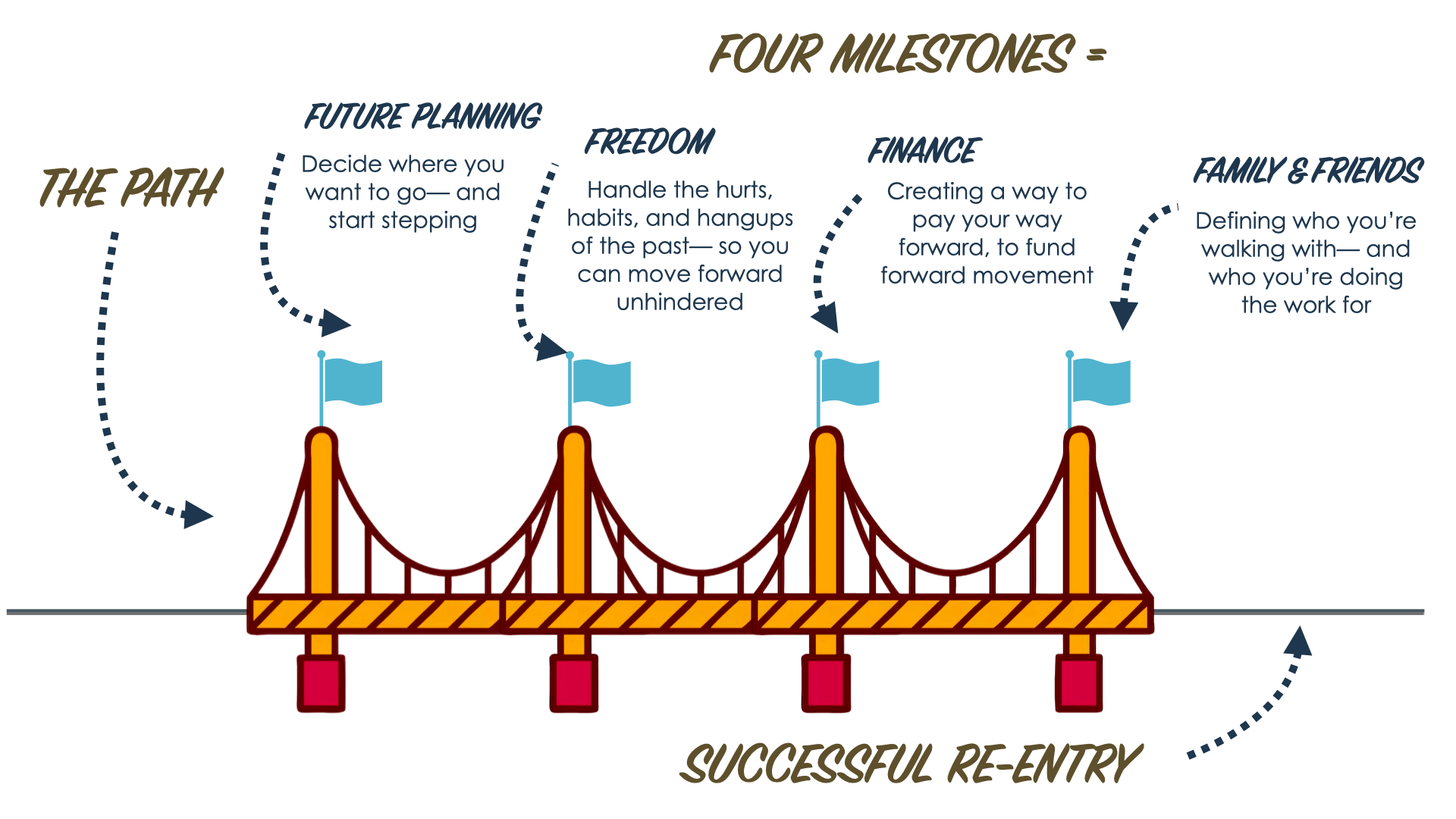
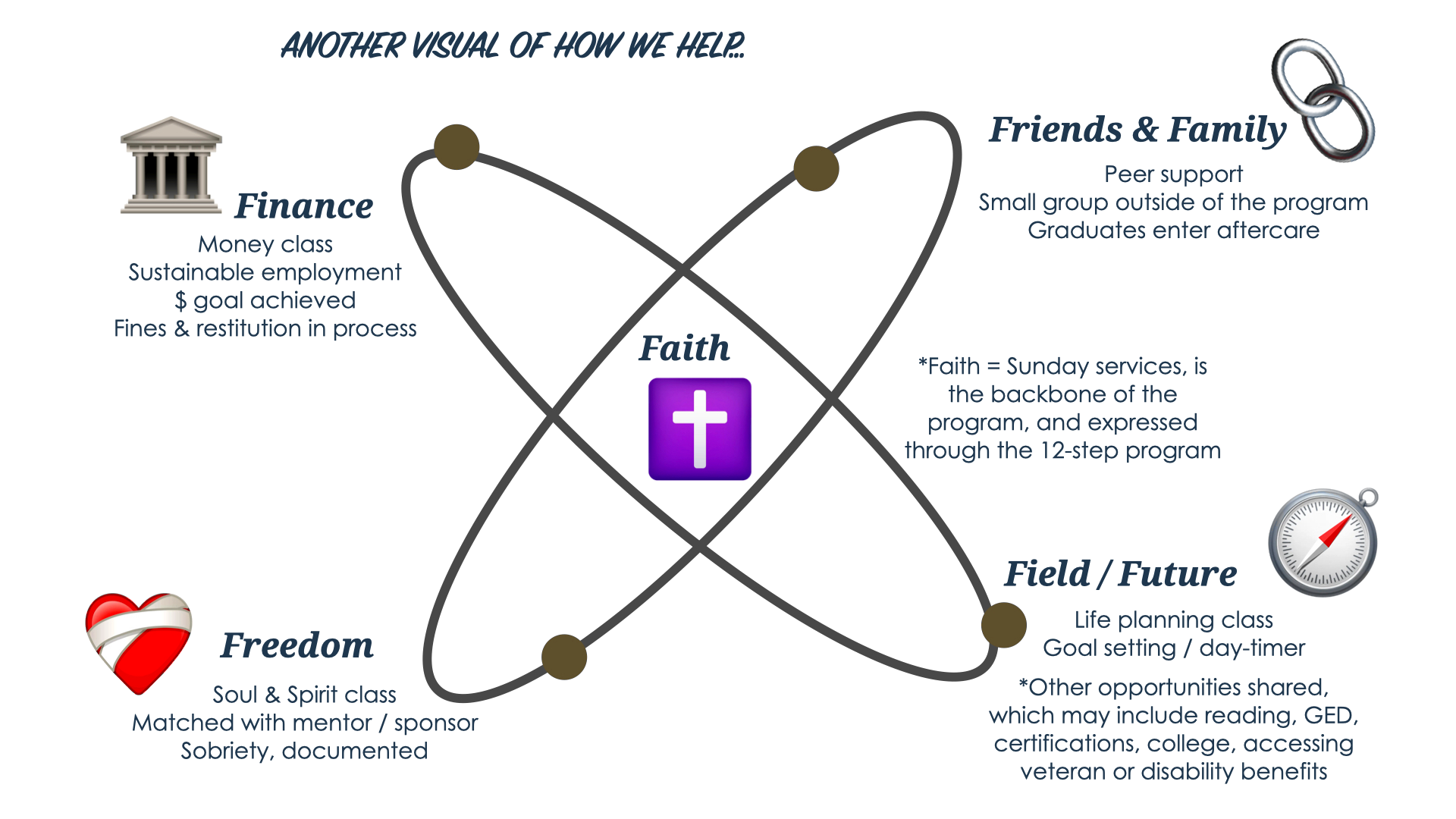
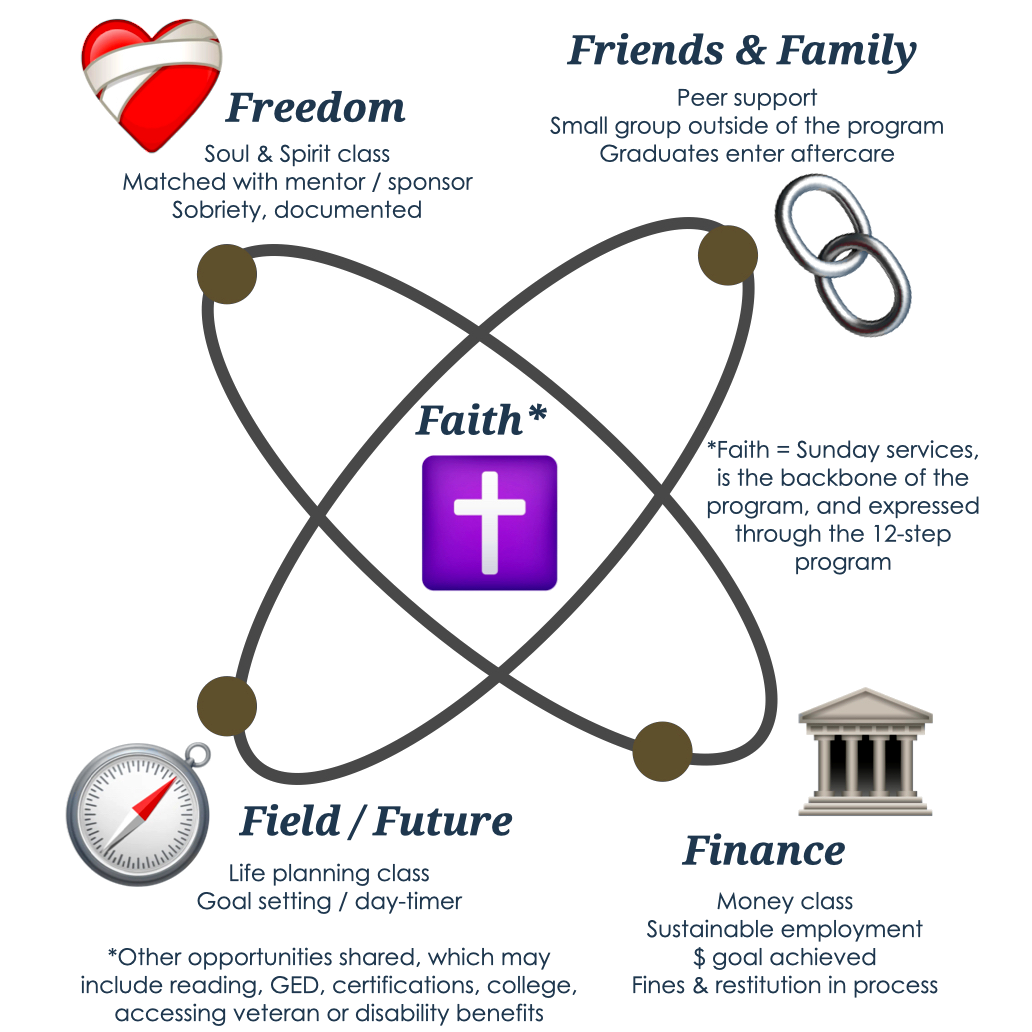
We walk through each of the following four categories:
1. Future planning
Decide where you want to go— and start stepping / because most program participants haven’t learned to think long-term yet can with the right training.
2. Freedom
Handle the hurts, habits, and hangups of the past— so you can move forward unhindered / because the common threads we see in men who return to prison is undealt-with addiction and a refusal to address past emotional hurts.
3. Finance
Creating a way to pay your way forward, to fund forward movement / because participants must learn to earn money, spend it wisely, and “look ahead” rather than exhausting their entire income on payday.
4. Family & friends
Defining who you’re walking with— and who you’re doing the work for / because most key moments in life (past, present, and future) have more to do with the people we are with than anything else. Healthy relationships are essential.
Scheduling and programing:
Substance abuse / recovery classes are held each Thursday evening and continue indefinitely, walking through each of the twelve steps a week at a time. The other three core classes are held each Tuesday evening and are taught in a “loop.”
✔️ For two months we teach about emotional health and wholeness.
✔️ For two months we teach about financial management.
✔️ For two months we teach about life-planning, goal-setting, and time-management.
Each man is matched to a mentor, who walks with them for the duration for the program.
The fine print
More clarification: The program is taught in a 6-month cycle. Men begin the program the day they show-up and they all walk through the same material together. Since the program repeats, everyone attends all the classes by the time they are eligible to graduate.
Graduation not only involves time but also successfully completing the benchmarks of the program.
Benchmarks include:
✔️ Attending the core class for each of the four areas
✔️ Sobriety and clean time, verified through regular drug tests
✔️ Obtaining sustainable employment, paying their program fees, and setting enough money aside in savings to launch into the next chapter (i.e., rent, utility deposits, etc.)
In addition, each graduate is invited— and encouraged— to join an after-care program, further empowering them to make a successful transition.
Our six-month program provides opportunities that support successful transformations (from the inside out) which empower, strengthen and create productive, contributing members of society.
Some people think of places like ours as "halfway houses.”
We believe "whole way" describes it better. We are a one-stop shop that facilitates change in every area of life.

Positive Momentum
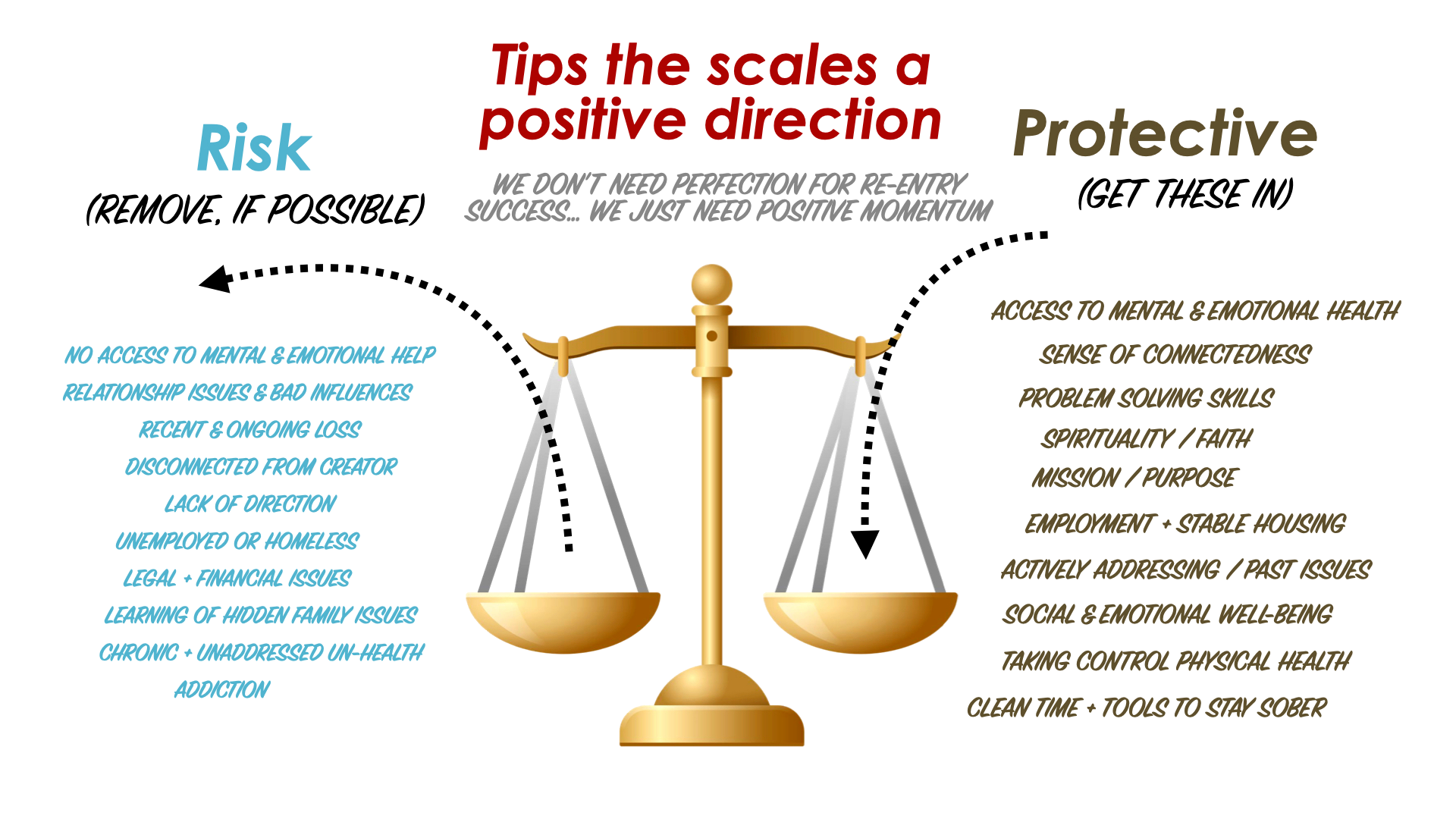
Progress, not perfection / direction, not distance
Prison re-entry (in fact, any kind of personal development) is hard if you think you need to be perfect in order to make progress.
But that’s not how it works.
We don’t need to be “perfect.” We just need to “tip the scales” in a positive direction. We do so by removing as many risk factors as possible while adding as many protective factors.
In time, the weight accumulates, momentum grows, and we accelerate our progress forward…
Getting practical
More about the implementation strategy
We teach our four core classes in a 6-month cycle.
We have a class on finance, a class on freedom, a class on future / life planning, and a faith-driven 12-step program.

Residents begin the day they enter the program, starting wherever we are.
There’s no “wait,” because we’ll repeat the cycle, so they can “end” where they began.

Non-class aspects of the program are completed based on the residents’ and volunteers’ schedules.
These activities— such as employment, skills acquisition, certifications, and other personal interests— are ongoing.
It takes 6-months to graduate.
— but graduation is based on time, as well as completion of program requirements. Participants are encouraged to "take their time" and make sure they "get it."

Graduates are invited to participate in the after-care program…
… further empowering them to make successful re-entry transition.
The Details

975 mentoring & counseling hours / year

32,400 meals provided per year

2500+ lives impacted since 1986

97% success rate to avoid recidivism

100,000+ miles driven for residents per year

95% job placement rate for program participants

100% donor driven / $0 federal or state funding

7,950 volunteer hours leveraged annually